
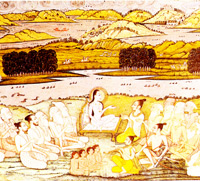
Question: What is the nature of the relationship between a guru and their disciple?
Answer: From ancient times until today, the art and science of yoga has been handed down from guru (teacher) to disciple (in Sanskrit shishya or chela). Disciples in turn hand down what they have learned to their disciples. Every guru is also simultaneously a disciple not only of his immediate guru, but also all the preceding gurus in his line of teachers. In this way, the yoga/Hindu culture has been handed down.
Acceptance of a guru or teacher is not undertaken lightly by the serious yoga aspirant. The serious seeker of absolute truth seeks out a guru or yoga teacher and considers what the guru is teaching. He checks what the guru is teaching with the Lord in his heart, with yoga scriptures, and with what previous yoga teachers have taught. The bona fide guru will themselves be a disciple of a guru. In other words, the yoga aspirant should not blindly accept anyone as guru; rather they must seek confirmation that the guru is in fact bonafide.
In the ancient yoga culture and tradition, the guru-disciple relationship is considered to be natural and necessary; similarly a person without a guru is considered to be like a boat without a rudder.